Nitrogen+Syngas 376 Mar-Apr 2022

Market Outlook


Market Outlook

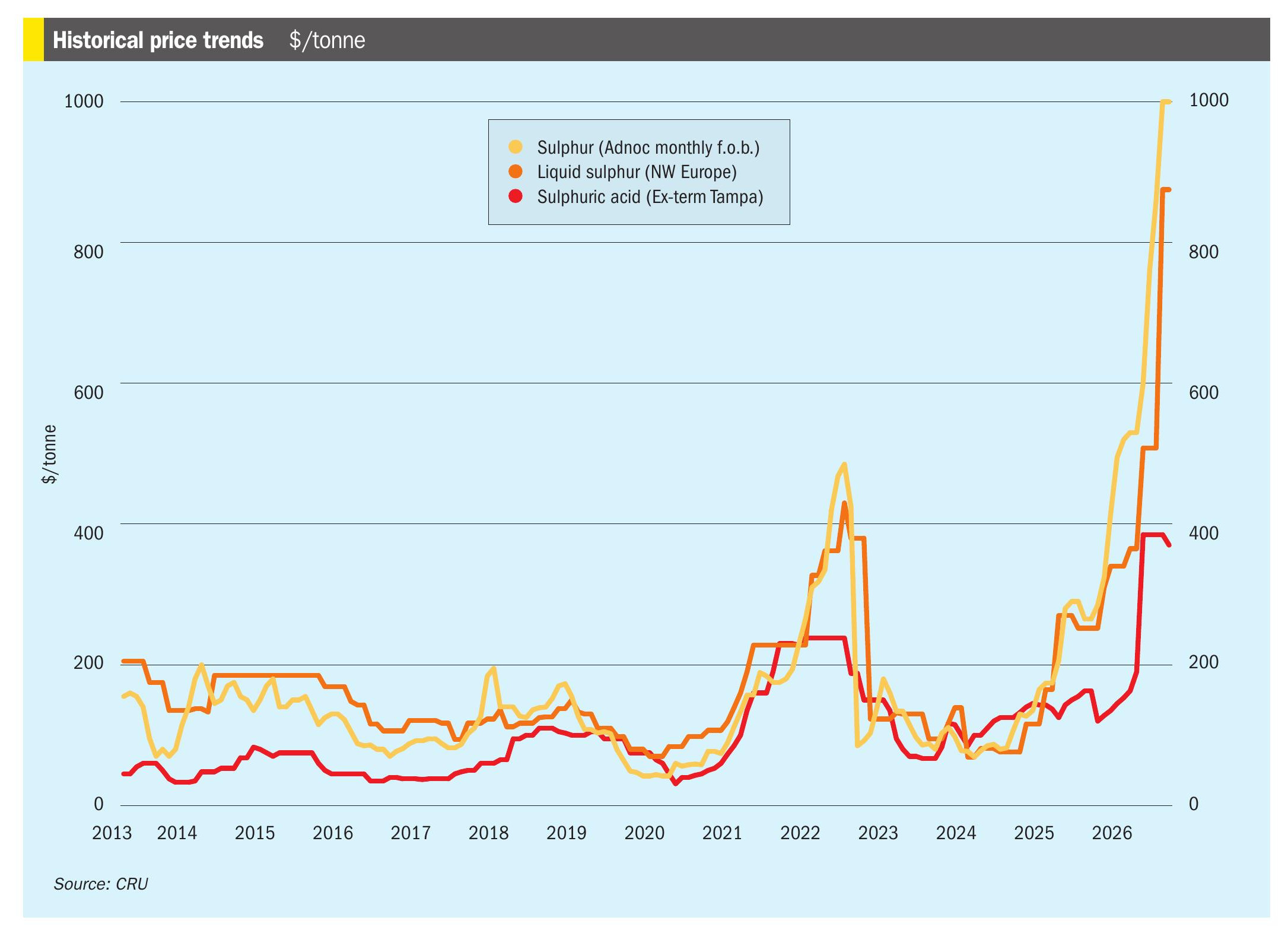
Historical price trends $/tonne

AMMONIA

  • The ammonia market, already seeing record pricing in the wake of the winter’s gas price squeeze, is braced for even higher pricing in the wake of the Russian invasion of Ukraine. The impact upon gas prices has been most marked, with rates of over $65/MMBtu seen in European forward pricing as the threat of a cessation of Russian gas exports loomed. This will undoubtedly lead to widespread idling of ammonia capacity in Europe.
  • Likewise the loss of ammonia from the Black Sea is likely to be for the foreseeable future, removing millions of tonnes of traded ammonia from the market. Russia represents more than 20% of global ammonia exports.
  • Conversely, a reduction in demand from DAP producers who cannot afford to buy ammonia at over $1,000/tonne could bring some market relief. There is also some additional ammonia supply available east of Suez.

UREA

  • The urea market outlook is highly volatile, as might be expected. Russia represents 14% of all globally traded urea exports. It is expected in the longer term that market participants will adjust to the new difficulties in trading Russian fertilizer under the financial sanctions regime, as they did to supply from Iran, for example.
  • However, in the short term, supply is tight, and the soaring prices in Europe and lack of other options mean that price rises are being passed on worldwide. Egyptian urea prices rose $300/t in a week.
  • Prior to the outbreak of conflict, India had as usual been setting the market tone, with IPL having secured 1.4 million tonnes at netbacks of around $520/t f.o.b. Baltic Sea.

METHANOL

  • Reference methanol prices have been falling, and generally rolled over from February to March at unchanged values. Methanex’s non-discounted reference price for North America remained constant at $619/t and its Asian contract price (ACP) for March was also unchanged at $480/t.
  • Argus launched a monthly European contract price. European contract prices are normally assessed quarterly, but buyers and sellers are discussing a move to monthly pricing as occurs in North America and Asia. The first Argus European monthly methanol contract price (CP) was assessed at e495/t 25 February for March supply.
  • While contract prices have remained unruffled, spot prices in all regions have been climbing following the outbreak of conflict between Russia and Ukraine. Russia is one of the largest exporters of methanol to Europe. Indian prices followed European prices upwards in early March. As yet however there are no signs of disruption to the supply of methanol, with availability generally good.
  • The jump in gas prices, especially in Europe, is sure to lead to shutdowns among producers however.

Latest in Outlook & Reviews

CRU Phosphates+Potash conference focuses on sulphur

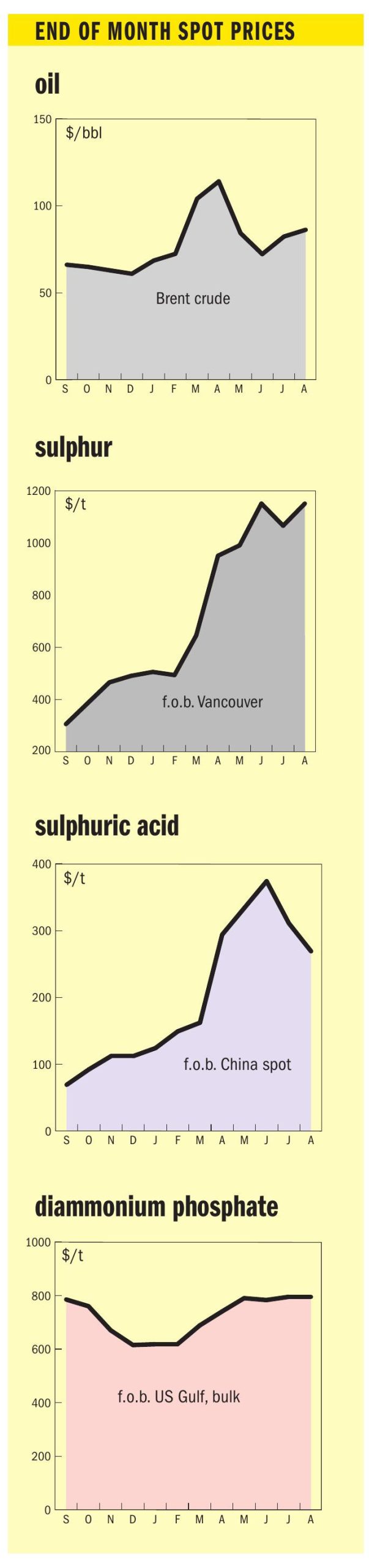
CRU’s Phosphates+Potash Expoconference was held in Paris in mid-April, with the Iran crisis uppermost in everyone’s mind. Margins are under pressure, sulphur has become a strategic constraint, and the phosphates investment pipeline is thin. CRU Principal Consultant Humphrey Knight examined the fallout from the closure of the Strait of Hormuz, noting that fertilizers have been hit harder than most bulk commodities. A large share of exportable sulphur and traded urea normally originates in, or passes through, Gulf producers. The effective closure of the strait has squeezed the traded part of these markets, where international prices are set, and pushed benchmarks up sharply. The global phosphate market is structurally tight, and the combination of Chinese export policy and Middle East logistics has pushed the traded segment into a much more fragile state.

Supply crisis worsens

It is two months on from our previous issue, and almost none of the news has been good from sulphur and downstream markets. Only three sulphur cargoes are confirmed to have transited the Strait of Hormuz since the US and Israeli strikes on Iran began, all loaded at Ruwais, with destinations in India, Tanzania and Morocco, carrying a total of 160,000 tonnes. It is believed that a couple of Iranian vessels with a total of 75,000 tonnes may also have left covertly. But in spite of some Middle Eastern sulphur making its way to Saudi Red Sea ports or Duqm on Oman’s Indian Ocean coast, around 700,000 tonnes is still trapped on ships stranded in the Gulf, and coupled with production cuts in the region, it is estimated that over 1.2 million tonnes has so far been removed from the market.