Market Insight
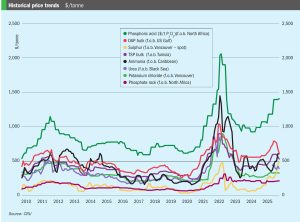
Price trends and market outlook, 18th December 2025.


Price trends and market outlook, 18th December 2025.
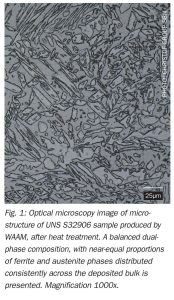
Christof Group SBN is actively integrating advanced manufacturing solutions such as wire arc additive manufacturing (WAAM) into its portfolio for the manufacture of high-pressure equipment in urea and ammonia plants.
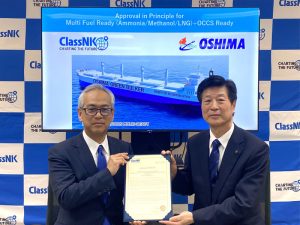
ClassNIK and Oshima Shipbuilding agree AiP for ammonia/methanol/LNG and OCCS Ready Bulk Carrier

Barents Blue partners with Proton Ventures on Barents Clean Ammonia project, Europe's largest clean ammonia production plant

Venkat Pattabathula reports on the American Institute of Chemical Engineers’ (AIChE) Safety in Ammonia Plants and Related Facilities Symposium, held from September 7–11th 2025, in Atlanta, Georgia, USA.
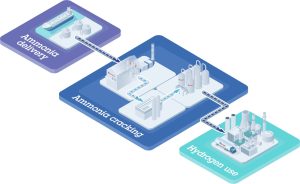
Air Liquide is developing a new ammonia cracking technology based on its proven steam methane reforming (including SMRX™ ) technology, which introduces a heat exchange concept to cut energy use, lower environmental impact, and potentially eliminate steam export. Leveraging extensive SMR design expertise, a robust R&D programme, and an industrialscale NH3 cracking pilot plant, it aims to rapidly mature all technology blocks and deliver safe, reliable, and customisable lowcarbon hydrogen solutions to meet growing demand.
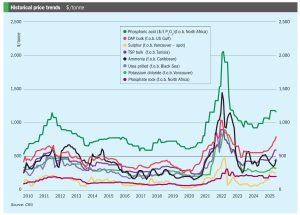
Price trends and market outlook, 23rd October 2025

Does artificial intelligence (AI) really herald a revolution in fertilizer production and, if so, what are the practical examples of this?
thyssenkrupp Uhde says that it has successfully commissioned a hydrogen recovery unit (HRU) at the Fertil ammonia-urea plant in Ruwais, owned by Fertiglobe, a global exporter of urea and ammonia. The scope of work included engineering, procurement and site supervision during installation and start-up of the units.

As part of the Japanese government’s Green Transformation scheme, two hydrogen producers have been selected to receive subsidies for low-carbon production projects. Out of the overall $1 trillion GX scheme, $51 billion is earmarked for hydrogen and ammonia investments, with the bulk going towards a long-term programme that subsidises the increased production costs. The first two recipients are a Toyota Tshuho-led consortium (electrolytic hydrogen for steel), and Resonac (hydrogen from used plastics for ammonia). In the programme, production projects are required to have the support of a major hydrogen consumer – in Resonac’s case, this is Japanese chemicals giant Nippon Shokubai, who will offtake the ammonia produced from lower-carbon hydrogen.