
Selecting the right NPK production option
Blended and compound NPK fertilizers are a mainstay of many markets globally. We review the main production technology options.


Blended and compound NPK fertilizers are a mainstay of many markets globally. We review the main production technology options.
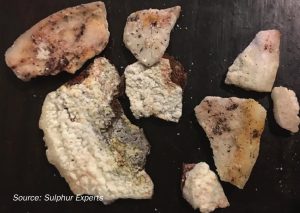
Sulphur Experts Inc. combines new learnings, historical data, and recent onsite experience from operating companies to show what factors really impact ammonia plugging risk and what can be done to control them in order to allow for a wider operating range for SWS processing in the refinery SRU.
Rising costs of fossil fuels in many markets, including coal in China and high gas costs in Europe are pushing up ammonia production costs. Can the falling cost of electrolysis make green ammonia production cost competitive in the near future?
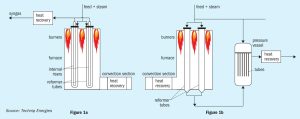
Previously, recuperative reforming has been mostly applied for capacity increase revamps, but nowadays it is a key enabler for efficient low carbon hydrogen and syngas production. Jan-Jaap Riegman of Technip Energies, Francesco Baratto of Casale and Stefan Gebert of Clariant discuss the benefits of recuperative reforming for reducing the carbon footprint of existing assets.
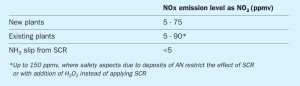
Highly efficient N2 O abatement technologies, coupled with the continually rising CO2 e price/ tonne are the driving forces behind nitric acid plant operators looking for increasingly sensitive and precise measurements of the N2 O mass emission. David Inward of Sick AG discusses new state-of-the-art emission monitoring technology which provides the measurements required.

CRU’s Nitrogen + Syngas conference convened at the Hyatt Regency Barcelona Tower in Barcelona, from March 5th-8th.
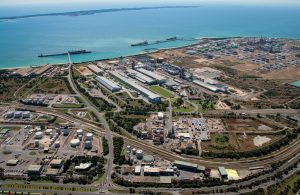
BASF says that its high-pressure regenerative CO2 capture technology HiPACT ® , codeveloped by BASF and engineering partner JGC Corporation will be used by INPEX, one of Japan’s largest exploration and production companies, in its Kashiwazaki Clean Hydrogen/Ammonia Project. This is Japan’s first demonstration project for the production of blue hydrogen/ammonia from domestically produced natural gas, the consistent implementation of carbon capture, utilisation and storage (CCUS) in domestic depleted gas fields and the use of hydrogen for power generation and ammonia production. The project is funded by the Japanese governmental organization New Energy and Industrial Technology Development Organization (NEDO).
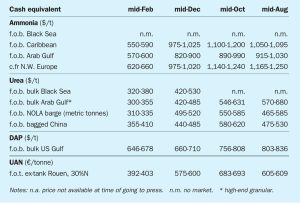
Market Insight courtesy of Argus Media

The EU benchmark TTF natural gas price had fallen to $16.89/MMBtu on average for February, down 19% on January’s average and 36% lower than the figure for February 2022. By the end of the month it had fallen to $14.83/MMBtu, its lowest level since the outbreak of war in Ukraine. EU gas storage was assessed as 61% full on 28 February, compared to a five-year seasonal average of 40%, due to strong LNG imports and mild weather over the winter. Over one third of European ammonia capacity has returned to production as gas prices fall.

On March 20th this year, just as this issue was going to print, the UN Intergovernmental Panel on Climate Change (IPCC) issued its Synthesis Report, one of its 5-7 yearly comprehensive assessments of how the world’s climate is changing and what needs to be done to ameliorate it. In spite of all of the progress that has been made since the 5th Synthesis Report in 2017, the IPCC notes that: “the pace and scale of what has been done so far, and current plans, are insufficient to tackle climate change.” While the body believes that keeping warming to 1.5°C above pre-industrial levels is still possible, it is not likely unless work to decarbonise proceeds more rapidly. In particular, the IPCC suggests that CO2 and equivalent emissions need to fall by 43% by 2030 compared with 2019 values, and 60% by 2035 to achieve this goal.