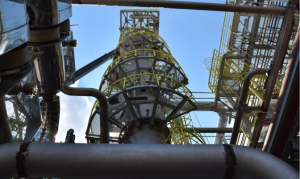
EuroChem targets Q3 2026 start up for Kingisepp expansion
Russia's EuroChem plans to bring its new ammonia and urea plant in Russia’s Leningrad Region on stream in the third quarter of 2026.


Russia's EuroChem plans to bring its new ammonia and urea plant in Russia’s Leningrad Region on stream in the third quarter of 2026.
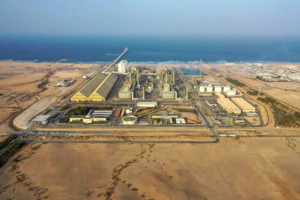
Oman India Fertilizer Company (OMIFCO) has formally announced plans to proceed with an initial public offering of 25% of its existing ordinary shares and list on the Muscat Stock Exchange (MSX).

OCI Global has agreed to sell 50% of its remaining operating business, OCI Nitrogen in Geleen, to Czech group Agrofert in a staged transaction that paves the way for a full exit from European fertilizer production.
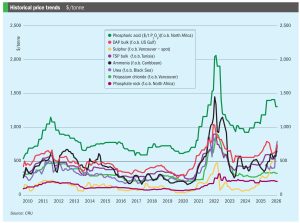
Price trends and market outlook, 7th May 2026.
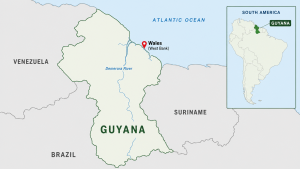
Guyana has attracted a mix of Chinese, US, Indian, European and local engineering groups to bid for the Guyana Ammonia and Urea Plant (GAUP), a 300,000 t/y fertilizer project planned at Wales alongside the country’s gas‑to‑energy complex.

Project Meadowlark, a more than $1 billion homegrown nitrogen fertilizer complex in Gothenburg, Nebraska, has cleared key early milestones as it targets civil works in 2027 and commercial operations by 2029.

Brussels has put Europe’s gas‑exposed fertilizer industry at the centre of its new Fertilizer Action Plan, warning that high energy costs and plant closures threaten the region’s nitrogen capacity and long‑term food security.
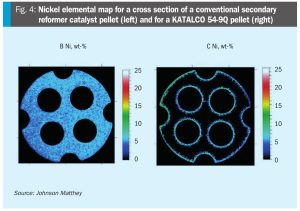
Johnson Matthey Davy Technologies presents an innovative nickel catalyst for secondary reformers that lowers catalyst refill costs, aids reliability and reduces environmental impact.
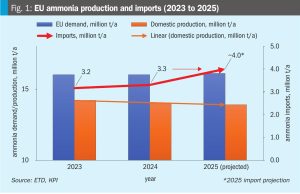
VK Arora of Kinetics Process Improvements, Inc. (KPI) looks at how – while carbon border taxes may reshape ammonia trade – the economics of hydrogen and electricity will ultimately determine the long-term competitiveness of European production.

CF Industries has delayed a planned multi-week maintenance turnaround at its Donaldsonville, Louisiana complex, the world’s largest ammonia production facility, in response to the supply disruption caused by the Strait of Hormuz closure, the producer announced in a press release. The company said the decision is expected to make approximately 100,000 tonnes of additional granular urea available to US customers during the spring application season. CF Industries added that it is also prioritising new sales to domestic customers over higher-priced export orders for the duration of the spring planting season.