Carbon dioxide as a feedstock
Falling costs for production of hydrogen by electrolysis are encouraging more serious consideration of using recovered carbon dioxide as a feedstock for chemicals and even fuels production.


Falling costs for production of hydrogen by electrolysis are encouraging more serious consideration of using recovered carbon dioxide as a feedstock for chemicals and even fuels production.
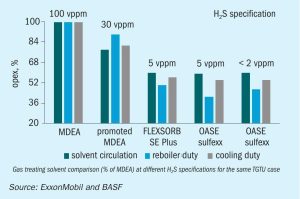
The removal of hydrogen sulphide (H2 S) has become increasingly important as the oil and gas industry moves towards more efficient and sustainable production of lower emission clean fuels. BASF and ExxonMobil* have jointly developed a proprietary amine, OASE® sulfexx™ , to help refiners and gas processors achieve sulphur removal targets while reducing their carbon footprint via lower energy consumption. This new solvent technology is suitable for low and high pressure applications and shows superior performance characteristics over generic and promoted MDEA formulations, as well as sterically hindered amines such as FLEXSORB™ SE and SE Plus.

Merchant ammonia capacity, only a relatively small 10% of overall ammonia demand, has been expanding in recent years and was already in surplus even before the current Covid crisis, but longer term a shortage of new projects may tighten the market again.

We profile a selection of innovative speciality products and agronomic technologies that have recently been brought to market.
West Texas Intermediate (WTI) forward oil prices for May dropped into negative territory during mid-April, on fears of lack of storage capacity to deal with the excess production. Forward prices for June were also nosing to equally unprecedentedly low levels.Elsewhere, Brent Crude spot prices dropped to $20/bbl, a fall of $50/bbl from the start of 2020.
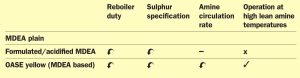
BASF has developed a new generation of promoter system compatible with MDEA solutions named OASE® yellow. The new promoter system increases the selectivity and capacity of the amine solvent, resulting in improved performance of tail gas treating units and allowing the processing of more sour crudes. A. Kern and G. Vorberg of BASF discuss two case studies demonstrating the benefits of OASE yellow.

This year’s Nitrogen + Syngas conference was held from 17-19 February in The Hague, Netherlands.
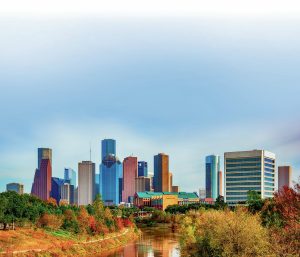
CRU’s Sulphur + Sulphuric Acid 2019 conference was held in Houston last November.

At the time of writing this editorial, the World Economic Forum was having its usual annual meeting in the Swiss resort of Davos. Prior to this year’s meeting, as usual the WEF had produced its annual Global Risks Report to serve as a talking point for the meeting. While some of the risks were as usual political and economic, from proliferation of weapons of mass destruction and the “retreat from multilateralism” to growing inequalities of wealth in the developed world and “domestic political polarisation”, for the first time in the organisation’s history, the top five global risks in the report ranked by likeliness – which looks at potential global pitfalls over the next 10 years – were environmental. Perhaps with the pictures of Australia’s bush fire season fresh in their minds, the 750 experts ranked extreme weather events as the most likely, but climate change, biodiversity loss and sustainability in agriculture all ranked highly.
CRU’s Nitrogen + Syngas conference and exhibition takes place this year at the World Forum, The Hague, in The Netherlands, from 17 to 19 February 2020.