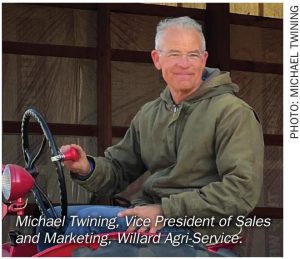
Nourishing soils, nourishing people
Michael Twining, Vice President of Innovation, Willard Agri-Service, explores the theme of purpose in the fertilizer industry.


Michael Twining, Vice President of Innovation, Willard Agri-Service, explores the theme of purpose in the fertilizer industry.
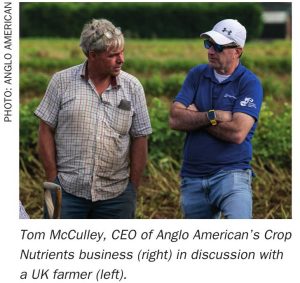
Producing food sustainably will require concerted collaboration across the whole value chain, concludes a new landmark report.

Abu Dhabi-based nitrogen producer and distributor Fertiglobe says that it is acquiring the distribution assets of Wengfu Australia Pty Ltd. through an asset sale and purchase agreement, expanding its downstream reach and enhancing access to supplying Australian customers. Fertiglobe currently supplies around 600,000 t/a of urea to Australia, with the potential to grow supply volumes […]
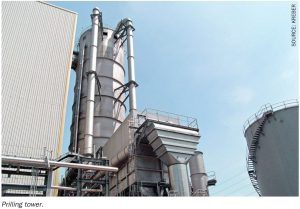
UreaKnowHow.com reviews the main production options for incorporating sulphur into urea, the world's most widely applied commodity fertilizer.
Egypt’s Minister of Petroleum and Mineral Resources, Karim Badawi and New Valley Governor, Mohamed Al-Zamlout were present at the signing of a framework agreement between a consortium of Egyptian public companies to build a new phosphoric acid plant at Abu Tartour in the New Valley region. The project aims to maximise added value and increasing the economic return on Egyptian phosphate ore by using it in higher-yield industries rather than exporting it as a raw material. The Egyptian state-owned consortium includes Abu Qir Fertilizers; East Gas Company, Mineral Resources and Mining Industries Authority; Misr Phosphate, AT-PHOS, Petroleum Projects and Technical Consultations Company (PETROJET), and Engineering for the Petroleum and Process Industries (ENPPI), all of which are shareholders in the project. The contractor agreement was signed with a Chinese consortium of China State Construction Engineering Corporation (CSCEC) and East China Engineering Science and Technology Co (ECEC).

OCP Nutricrops has received a certification that its customised phosphate fertilizers, developed specifically for the European market, meet the EU’s stringent low cadmium content requirements. The certified fertilizers contain less than 20 milligrams of cadmium per kilogram of phosphorus pentoxide (P2 O5 ), far below the European Union’s regulatory ceiling of 60 mg/kg. OCP Nutricrops says that it plans to expand this low-cadmium benchmark across all its fertilizer products worldwide by the end of 2025. Reducing cadmium in agricultural fertilizers is considered a public health priority across Europe. This initiative is closely aligned with EU goals to mitigate food-related health risks and safeguard ecosystems from harmful contaminants.
Northern Nutrients, a manufacturer of enhanced nitrogen sulphur fertilizers, has announced a new ownership structure following an investment by Shell Trading Canada. Shell Trading Canada has invested in expanding Northern Nutrients’ current facility, resulting in the formation of a new joint venture. The expansion will result in a tripling of current capacity of 50,000 t/a to 150,000 t/a of sulphur-based fertilizers. The company’s facility near Saskatoon produces enhanced nitrogen sulphur fertilizers using Shell Thiogro technology. Their flagship product, Arctic S, is 11% nitrogen and 75% micronised elemental sulphur. Northern Nutrients says that its collaboration with Shell underscores their shared dedication to providing retailers and farmers with high-quality and efficient fertilizers and meet the growing demand for innovative fertilizer products.

The S.A. Nyyazov Chemical Plant in Turkmenabat produced 115,850 tonnes of sulfuric acid during the first five months of this year, according to local press reports. The plant also produced 11,297 tonnes of mineral fertilizers over the same period, including 5,227 tonnes of nitrogen-based and 6,070 tonnes of phosphorus-based fertilizers. The Turkmenistan government recently approved the construction of a new plant at the facility to produce 350,000 t/a of superphosphate and 100,000 t/a of ammonium sulphate. South Korea’s Daewoo Engineering & Construction Co. has been awarded the EPC contract for the plant.
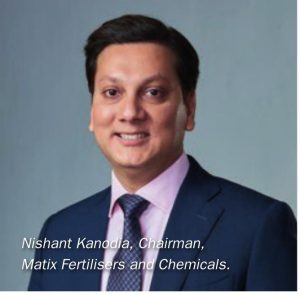
Nishant Kanodia , chairman of Matix Fertilisers and Chemicals Ltd, has been appointed to the board of directors of the International Fertilizer Association (IFA). The appointment was formalised at the IFA Annual Conference 2025 in Monaco, with the theme of ‘Investing in the Future of Food’. With approximately 500 members across more than 80 countries, IFA champions policy, innovation, and sustainable fertilizer practices that contribute to global food security.
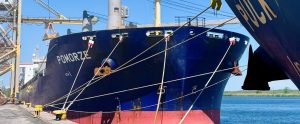
Grupa Azoty Police has successfully loaded a 36,640 tonne fertilizer consignment at its seaport for transport to South America. The historic shipment marks the first of its kind, in terms of its scale and the history of the company’s Police production plant, Grupa Azoty said.