
The year ahead – affordability vital
We look ahead at fertilizer industry prospects for the next 12 months, including the key economic and agricultural drivers likely to shape the market during 2023.


We look ahead at fertilizer industry prospects for the next 12 months, including the key economic and agricultural drivers likely to shape the market during 2023.
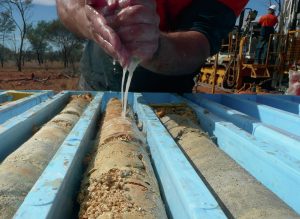
Fertilizer International presents a global round-up of phosphate rock, phosphoric acid and finished phosphates projects.
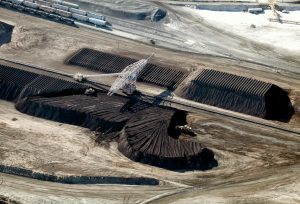
Last year saw global trade in all commodities have to take into account the potential loss of supply from Russia, a key exporter of many commodities. Sulphur was no exception, with prices swinging wildly across the year.
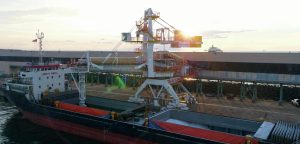
Covid, demographics and a shift from an industrial to a consumer-led economy have stalled China’s previously breakneck growth, with a potential impact upon all commodity markets, including fertilizer. At the same time, Chinese export restrictions have overheated the urea market.

The International Fertilizer Development Centre (IFDC) has appointed Henk van Duijn as President and Chief Executive Officer (CEO) as of January 1st 2023. Van Duijn brings more than 30 years of experience in agriculture and international development, with a focus on Europe, Africa, and Asia. Prior to his selection as IFDC President and CEO, van Duijn served as Vice President, Corporate Services, and Chief Operations and Finance Officer at IFDC. Before that, he headed the 2SCALE program (2019-2021) and served as CEO of Bopinc (2014-2019). As a diplomat and civil service director in the Netherlands, van Duijn led the design, startup, and implementation of large-scale interdisciplinary programs as well as national and international public-private partnerships in Europe, Africa, and Asia. He holds a master’s degree in Land and Water Management from Wageningen University & Research.

The curtailment of ammonia production in Europe and reduction in export supply from Russia has led to an unprecedented year for the merchant ammonia market.
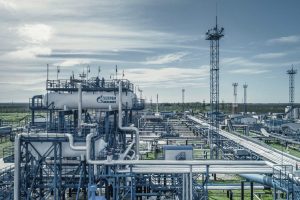
The war in Ukraine has severely affected the supply of ammonium nitrate and CAN from Russia and Ukraine, with particular potential impact on Europe and Latin America. Can urea make up the difference?

Some 1,160 delegates from 475 companies and 76 countries gathered in Vienna, Austria, for the 89th International Fertilizer Association (IFA) Annual Conference, 30 May – 1 June 2022. We report on the main highlights of this three-day flagship event.

Applying dissolved fertilizers via micro-irrigation systems or leaf sprayers offers commercial fruit and vegetable growers clear-cut gains – in terms of input costs, nutrient use efficiency, labour, time and energy.
Some 410 delegates from 208 companies and 45 countries participated virtually in the IFA Global Sustainability Conference, 28-31 March 2022. We report on the main highlights of this four-day event.