
OCP Nutricrops unveils nine million tonne production boost
OCP Group subsidiary OCP Nutricrops has announced a major investment to expand its phosphate fertilizer production capacity by nine million tonnes by 2028.


OCP Group subsidiary OCP Nutricrops has announced a major investment to expand its phosphate fertilizer production capacity by nine million tonnes by 2028.
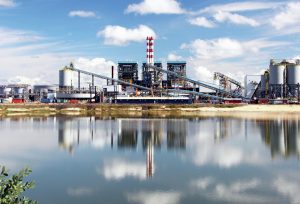
Indonesia has become the epicentre of the world nickel industry, and is now seeking to raise royalty rates to capture more value from this. Will this impact upon the continuing expansion of HPAL capacity there?

Verdant Minerals says it has been granted two key productive mineral leases for its Ammaroo Phosphate Project by the Northern Territory government. The company says that this significant milestone advances one of the world's largest undeveloped phosphate resources, located about 220km southeast of Tennant Creek. Acting Chief Minister and Minister for Mining and Energy, Gerard Maley, stated, “This is a significant milestone in progressing a world-class resource project that will support jobs, drive investment, and strengthen the NT’s position as a leader in resource development.”
The Philippine government is looking to follow Indonesia’s success in attracting downstream investment by banning the export of nickel ore. The Philippine Congress could ratify a bill banning raw mineral exports as early as June. The ban would come into force five years after approval to give miners time to build downstream processing plants. This development could potentially lead to higher nickel prices in the medium term if there is a delay to building domestic capacity and the Indonesian government becomes serious about restraining ore availability.

Metso has secured a two-year life-cycle contract with Ideal Development for Manufacturing Industries (IDMI) for a new phosphate beneficiation plant at the Eshidiya phosphate mine in the south of Jordan.
President Yoweri Kaguta Museveni of Uganda has overseen the signing of signed an implementation agreement for the Uganda Refinery between the Ministry of Energy and Mineral Development, the Uganda National Oil Company (UNOC) and joint venture partner Alpha MBM Investments. Alpha MBM is a UAE-based company led by Sheikh Mohammed bin Maktoum bin Juma Al Maktoum, a member of the Dubai Royal Family. The agreement paves way for the design, construction and operation of the 60,000 bbl/d refinery to be undertaken at Kabaale. Construction is expected to take three years, with UNOC and Alpha MBM Investments as the project partners. The refinery, which will be East Africa’s first major crude processing plant, aims to reduce Uganda’s dependency on imported petroleum products and is expected to meet the local and regional demand for petroleum products.
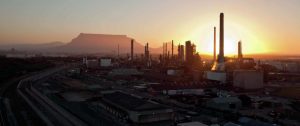
Astron Energy, a subsidiary of Glencore, says that it will spend $328 million to upgrade its South African crude oil refinery in order to comply with the country’s upcoming cleaner fuel regulations. The investment aims to bring the facility in line with South Africa’s Clean Fuels II standards, which mandate lower sulphur content in both petrol and diesel. The 100,000 bbl/d refinery near Cape Town is one of only two remaining operational refineries in the country. Astron says that construction work is already under way for a gasoline hydrotreating plant that will reduce sulphur levels to Euro 5 (<10ppm sulphur) specifications. The regulations have been delayed to July 2027 due to concerns over the cost of upgrading existing refining infrastructure. n
Avenira has secured an A$7.56 million strategic investment from majority shareholder Hebang Biotechnology to progress its Wonarah phosphate project in Northern Territory. The investment, in which Hebang will acquire 1.08 billion shares priced at A$0.007 each, will boost its equity holding in Avenira to 49%. Hebang has also agreed to provide Avenira with an unsecured drawdown loan facility to be repaid on completion of the placement or after the date of the first drawdown.

Six Japanese companies have agreed to explore investment opportunities for a large-scale green ammonia plant in Odisha, India, being planned by Acme Group. Last year, IHI Corporation agreed to import up to 400,000 t/a from Acme’s project. IHI has now signed a memorandum of understanding with Hokkaido Electric Power, Mitsubishi Gas Chemical Company, Mitsui OSK Lines (MOL), Mizuho Bank, and Tokyo Century Corporate. The partners plan to create a special-purpose company for ammonia production and investment participation. Hokkaido Electric is testing ammonia co-firing at its coal-fired power plant and studying infrastructure needs, while Mitsubishi Gas Chemical wants to decarbonise its ammonia use. Mizuho Bank is planning to invest up to $13 billion in hydrogen and ammonia supply chains by 2030, and Tokyo Century is exploring green ammonia as part of its shift beyond solar to support carbon neutrality.
The Kazakh government has approved the construction of a new ammonia and urea plant in the country’s Mangistau region, on the eastern shore of the Caspian Sea. Construction will be carried out by a joint venture between QazaqGaz National Company and ESTA Construction under Qazesta Fertilizers Ltd. The total investment for the project is $1.35 billion, with construction expected to be completed within three and a half years. The plant’s annual production capacity is projected to reach up to 700,000 t/a of urea and 420,000 t/a of ammonia, adding value to the country’s natural gas production and helping to substitute domestic production for foreign imports of nitrogen fertilizer. Despite a national demand of 3.2 million t/a, domestic production currently only meets about half of that need.