
Ammonium nitrate and fertilizer safety
A new book by leading industry expert Kish Shah looks at all aspects of ammonium nitrate production.


A new book by leading industry expert Kish Shah looks at all aspects of ammonium nitrate production.

Hydrocarbon-based production of ammonia carries an unavoidable carbon footprint. But one of the best methods for mitigating that footprint is already here: ultra-low carbon-intensity ammonia production, also known as “blue” ammonia. With blue ammonia production, a typical ammonia plant can sequester or repurpose game-changing volumes of carbon dioxide that would otherwise end up in the atmosphere. To help foster an optimal understanding of the benefits, Ameet Kakoti and Per Juul Dahl of Topsoe A/S provide an overview of the technologies that can help any ammonia operation achieve and maintain sustainable operations – sooner rather than later.
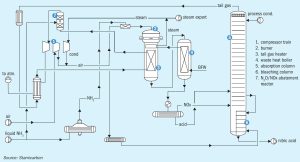
Paz Muñoz and Carmen Perez of Stamicarbon discuss the strategic selection of future-proof technology for nitric acid plants. To produce nitric acid in a feasible and sustainable way, manufacturers must carefully choose the right technology and consider the capex and opex involved in the production process to ensure long-term profitability.

The world’s transition toward the use of hydrogen and ammonia as clean energy and fuel sources will depend upon production technologies that are affordable, scalable, and meet net zero carbon targets. 8 Rivers recently introduced8 RH2 , a groundbreaking solution that offers world-leading efficiency in hydrogen production and captures over 99% of CO2 emissions. Maulik Shelat of 8 Rivers provides an overview of the technology with a comparison to other low-carbon hydrogen production technologies.
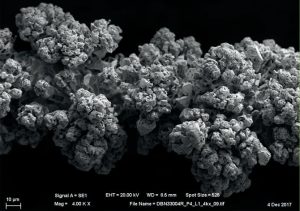
Although the nitric acid industry has an extensive history dating back centuries, nitric acid production continues to be a dynamic process with bespoke system solutions necessary per plant rather than a one size fits all. Kate Cardonne of Johnson Matthey discusses strategies to balance the cost and performance in nitric acid production.

Linde has developed a new adsorptive carbon dioxide removal process, called HISORP® CC, including but not limited to blue ammonia production. Based on a combination of mature technologies the process overcomes the drawbacks of traditional CO2 removal techniques and provides a carbon capture rate of greater than 99%. Thomas Ried discusses the pros and cons of different process configurations for CO2 removal and the benefits of the new technology.

An overview of the very latest in fertilizer handling and blending, including new contracts, company news and advances in technology.
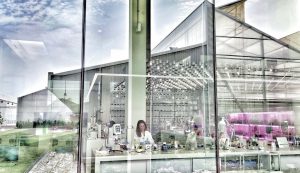
There is growing acceptance and integration of biostimulants into the wider fertilizer and agricultural markets. This is illustrated by rocketing sales, the spate of new product launches, and merger and acquisition activity.
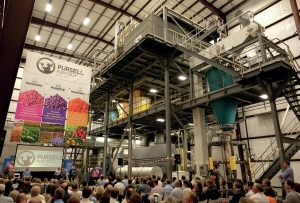
Technological innovation is vital to solving the global food challenge and delivering the transition to a low-carbon economy. Pejman Djavdan, Stamicarbon’s CEO, sets out his vision for a future-proof fertilizer industry – one that will enable the sustainable intensification of agriculture while also protecting the environment.
A review of recent additions to fertilizer product portfolios and new process technologies, as innovation within the industry accelerates to decarbonise production and improve nutrient use efficiency (NUE).