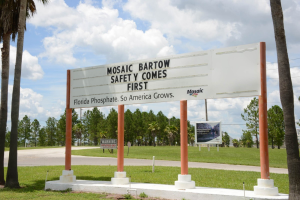
Mosaic trims phosphate runs as sulphur spikes
Mosaic has withdrawn its 2026 phosphate production guidance and is cutting rates at key US and Brazilian plants as record sulphur prices compress stripping margins in an already tight phosphate market.


Mosaic has withdrawn its 2026 phosphate production guidance and is cutting rates at key US and Brazilian plants as record sulphur prices compress stripping margins in an already tight phosphate market.

Brussels has put Europe’s gas‑exposed fertilizer industry at the centre of its new Fertilizer Action Plan, warning that high energy costs and plant closures threaten the region’s nitrogen capacity and long‑term food security.
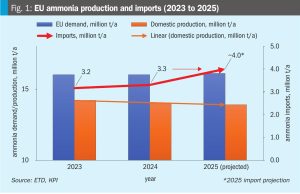
VK Arora of Kinetics Process Improvements, Inc. (KPI) looks at how – while carbon border taxes may reshape ammonia trade – the economics of hydrogen and electricity will ultimately determine the long-term competitiveness of European production.

Ilya Motorygin of GG Trading says fertilizer trading is performing an essential function currently – in a market disrupted by supply earthquakes.
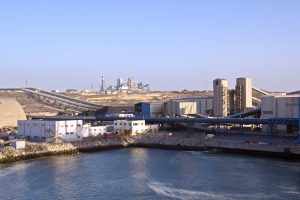
Stephen B Harrison of sbh4 consulting outlines the options for decarbonising diammonium phosphate (DAP).
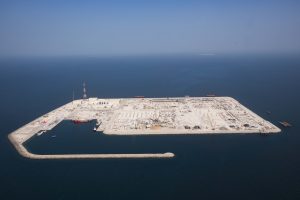
Sulphur production continues to expand in the Middle East and East and South Asia both from new refineries and major sour gas projects.
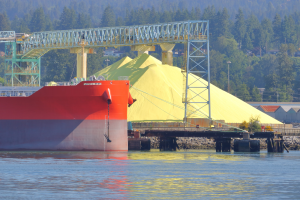
Policy decisions and geopolitical shocks are now the dominant drivers of sulphur and phosphate fertilizer markets, overriding more traditional seasonal fundamentals. The conflict in the Middle East, including the escalation around Iran, has tightened sulphur availability and lifted costs sharply, while China’s export restrictions continue to restrict global phosphate supply.
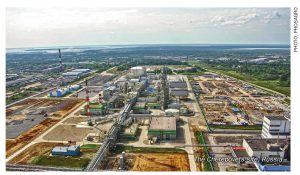
Multiple drone strikes have hit the industrial city of Cherepovets in Russia's Vologda Oblast region, according to Russian news agency TASS. The area contains PhosAgro's largest phosphate fertilizer production site. Cherepovets has a production capacity of around 700,000 t/a NPK and around 814,000 t/year DAP/MAP, according to CRU data, making it the largest phosphate fertilizer production site across Europe and the CIS. The site also contains several sulphuric acid plants with a combined capacity of 4.5 million t/a, making it Russia's largest production hub for the acid. This entire volume is consumed domestically.
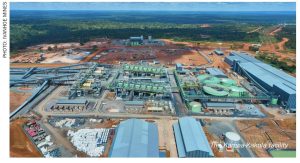
Canada-based Ivanhoe Mines stands to benefit from any sulphuric acid shortage caused by prolonged closure of the Strait of Hormuz now that the company is running a copper smelter, according Co-Chairman Robert Friedland. The 500,000 t/a direct-to-blister smelter at company-operated Kamoa-Kakula mine in the Democratic Republic of Congo produced its first anodes at the turn of the year.

Several battery material nickel miners in Indonesia have reportedly trimmed output by at least 10% due to a shortage of and higher prices for sulphur caused by supply disruptions arising from war in the Middle East. Sulphuric acid is used to process nickel ore into mixed hydroxide precipitate (MHP), a feedstock used in electric vehicle (EV) batteries.