Tag: Refinery

Cartagena refinery enters solid sulphur market

Cartagena Refinery has entered the solid sulphur market, diversifying its petrochemical portfolio, according to a company statement on 21 May. The first shipment of 260 tonnes has already been dispatched to the domestic market. This new venture is enabled by a recently commissioned pelletising plant that converts liquid sulphur into solid pellets, with a production capacity of 1,000 t/d. The refinery is targeting Colombia’s fertilizer, chemical, and mining industries, and is also planning to export to international markets, including Brazil, Peru, and countries in Africa.

Axens signs agreement with Egyptian Refining Company

Axens says that it has strengthened its collaboration with Egyptian Refining Company (ERC) via a long-term agreement aimed at maximising asset value and supporting ERC’s evolving needs in product supply, digital transformation, and refinery performance optimisation. Under the agreement, Axens will use its integrated portfolio of technologies, equipment, catalysts, and services to support ERC’s operational, economic, and sustainability objectives.

Duqm Refinery looking at further expansion

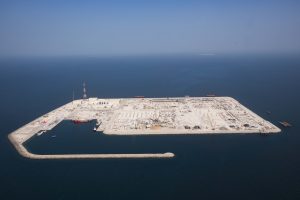
Following an increase in its processing capacity, Duqm Refinery is now looking at further expansion projects at the $9 billion refinery project located, in the Special Economic Zone at Duqm (SEZAD) on Oman’s southeast coast. The refinery, which now has an expanded capacity of 255,000 bbl/d, is run by OQ8, a joint venture between Kuwait Petroleum International (KPI) and Oman’s OQ Group. Speaking to local media, CEO Abdulla Al Ajmi said that OQ8 has now begun front end engineering design on a reformer unit to upgrade naphtha into high-octane gasoline components such as reformate, a critical step in producing finished, specification-grade fuels. In addition to the proposed reformer unit, Duqm Refinery is also exploring opportunities to enhance value creation from its refining by-products, notably sulphur and coke.

Completion of refinery upgrade

Maire Group subsidiary KTKinetics Technology says that it has completed work on the Rijeka Refinery Upgrade Project in Croatia, having completed the engineering, procurement and construction activities. The scope of work included a new delayed coking unit to process heavy residue and eliminate the production of fuel oil while increasing refinery efficiency capacity, the revamping of the process units and the utility network and the implementation of the latest solutions for coke handling and storage and sea jetty construction and shipping loading facilities.

Green hydrogen for Bilbao refinery

Repsol says that it is planning a 100MW green hydrogen plant to supply its Petronor refinery near Bilbao. From 2029, the plant will supply the refinery with 15,000 t/a of green hydrogen. Repsol says that the installation could prevent up to 167,000 tonnes of carbon dioxide emissions per year. The €292m ($346m) project has already secured €160m ($190m) in NextGenerationEU funds from the Spanish Recovery, Transformation, and Resilience Plan, after being recognised as a Project of Common European Interest by the European Commission.

SRU commissioned at Petrobrazi refinery

Romanian oil and gas group OMV Petrom has commissioned a new sulphur recovery unit at its Petrobrazi refinery, near the southern city of Ploiesti. Development work on the new SRU began in 2023, and represents the second at the site, treating acid gas produced during the refining process. The euro 45 million investment is part of euro 2 billion of improvements that have been made over the past 20 years as part of the company’s strategy to modernise its refining capabilities, aiming to reduce environmental impact. Last year, the company said it would invest around euro 750 million to build several sustainable fuel plants at the refinery, which are expected to become operational in 2028.

Low sulphur refinery upgrade for Viva Energy

Viva Energy has commissioned a new ultra-low sulphur gasoline (ULSG) plant at its Geelong refinery to meet Australia’s updated fuel standards, which came into effect on December 15. Under the standards, all gasoline grades must contain a maximum of 10 parts per million (ppm) sulphur, a so-called Euro-V standard. The ULSG plant was officially opened by the Minister for Climate Change and Energy, Chris Bowen MP, alongside Viva Energy Chairman Robert Hill and CEO Scott Wyatt.

Dangote cleared of breaching fuel sulphur limits

A UK–based energy watchdog, the Impact Investigators Platform (IIP), has dismissed allegations that the Dangote Petroleum Refinery imported substandard gasoline into Nigeria, describing the claims as “technically inaccurate, commercially implausible, and unsupported by verifiable evidence.” The IIP said its independent assessment of shipping data, customs declarations, and refinery process documentation found no indication that the refinery imported or sold Premium Motor Spirit (PMS) with sulphur levels above Nigeria’s approved limit of 50 parts per million (ppm). The investigation followed media reports alleging that a vessel had delivered high-sulphur gasoline to the Dangote Refinery under the guise of locally refined products. However, the IIP clarified that the cargo in question was an intermediate feedstock , a raw material used for refining and not finished gasoline meant for retail.