
Urea technology showcases
Casale, Saipem, Stamicarbon & Toyo Engineering Corporation showcase a selection of innovative technologies that have recently been brought to the market.


Casale, Saipem, Stamicarbon & Toyo Engineering Corporation showcase a selection of innovative technologies that have recently been brought to the market.
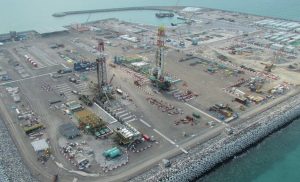
Already the world’s largest exporter of sulphur, Abu Dhabi continues to expand its sour gas production and sulphur output.
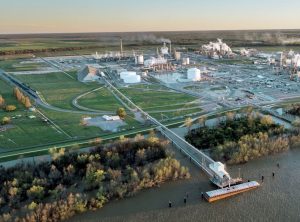
Mark Brouwer and Jo Eijkenboom of ureaknowhow.com examine the major shifts in global urea production. They also discuss the future of the urea industry and, in particular, how the sector is being affected by the increasing focus on low-carbon ammonia production.
Every urea plant is also a water plant as the overall reaction starts with two molecules of ammonia and one molecule of carbon dioxide resulting in one molecule of urea and one molecule of water. Further water is added to the process via the steam ejectors in the evaporation section. All this water, which is contaminated with ammonia, carbon dioxide and urea plus possibly other contaminants like formaldehyde, methanol, oil, etc is collected in an ammonia water tank and then sent to a wastewater treatment section. The purpose of the wastewater treatment section is to reduce the ammonia, carbon dioxide and urea levels to acceptable levels. First the wastewater is treated in a first desorber column, where LP steam is used to strip off the ammonia and carbon dioxide, reducing the ammonia content from approx. 6-8 wt-% ammonia to approx. 1 wt-% ammonia. Nothing happens with urea in the first desorber as temperatures are too low to hydrolyse the urea back to ammonia and carbon dioxide. This takes place in the next step, in the hydrolyser, which can be quite a large counter current column operating with MP steam at approx. 23 bar (Stamicarbon design) or a horizontal deep hydrolyser operating at approx. 33 bar (Saipem design, refer to figure). Downstream of the hydrolyser there is another desorber column to strip off the remaining ammonia and carbon dioxide. Nowadays, boiler feed water quality can be realised by modern wastewater treatment. But at higher plant loads the operating margin in the wastewater treatment can become too small leading to higher ammonia and urea levels during certain operating conditions… n

A summary of papers presented at CRU’s Nitrogen+Syngas conference, this year held at the Gothia Towers in Gothenburg, Sweden.

OCI Global says that it has reached an agreement for the sale of 100% of its interest in its large-scale nitrogen fertilizer subsidiary the Iowa Fertilizer Company LLC, located in Wever, Iowa, to Koch Ag & Energy Solutions for $3.6 billion. Completion of the transaction remains subject to US anti-trust approval and other customary closing conditions. The transaction is expected to close in 2024. Morgan Stanley & Co. International plc is serving as financial advisor to OCI on the transaction. IFCO produced 1.2 million t/a of urea ammonium nitrate (UAN) in 2021 and 700,000 t/a of anhydrous ammonia, as well as 700,000 t/a of diesel exhaust fluid (DEF).

The Saudi Arabian Mining Company (Ma’aden) has entered into a partnership with Metso and thyssenkrupp Uhde to develop and license an integrated process to reduce carbon emissions and recycle phosphogypsum in Saudi Arabia. A framework agreement between the three partners was jointly announced on 10th January.
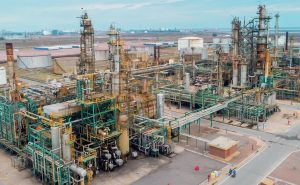
Tecnimont, part of MAIRE’s Integrated E&C Solutions business unit, has signed a letter of award with ADNOC for the onshore processing plant of the Hail and Ghasha Development Project. The award was signed at ADIPEC, the world’s largest energy summit. The project aims to operate with net zero CO 2 emissions, in part due to the facility’s CO 2 carbon capture and recovery units, which will allow the capture and storage of CO 2 . The project will capture 1.5 million t/a of CO 2 , taking ADNOC’s committed carbon capture capacity to almost 4 million t/a. The company recently announced its decision to double its carbon capture capacity to 10 million t/a by 2030. The Hail and Ghasha CO 2 will be captured, transported onshore and stored underground, while low-carbon hydrogen will be produced to replace fuel gas and further reduce emissions, according to ADNOC. The project will also use power from nuclear power plants and renewable sources from the grid.
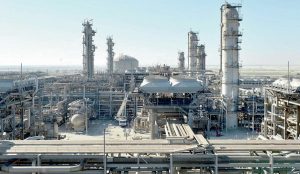
Following the completion of expansion work on the ultra-sour gas Shah field in May 2023, production has been ramped up. Occidental, which owns 40% of the Shah project and which operates the field in conjunction with ADONC Sour Gas, reported in July that it had achieved record output at Shah, with gross gas sales reaching 722 million scfd in Q2 2023 (equivalent to 1.1 billion scf/d of raw gas, which is 23% H2S and 10% CO 2 ). The expansion has taken processing capacity at Shah to 1.45 billion scf/d and forms part of the UAE’s plans to achieve gas self-sufficiency by the end of the decade. The expansion was conducted by Saipem, who were awarded a $510 million contract in 2021 to expand output from 1.3 billion scf/d to the current 1.45 billion scf/d. Work was completed two months ahead of schedule, according to Occidental.
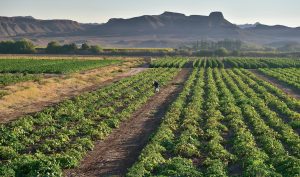
Prior to the covid pandemic, sub-Saharan Africa had been the fastest growing market for new fertilizer demand. However, the combination of pandemic related disruption, followed by the dislocations caused by the war in Ukraine, have pushed up prices and led to falling demand across the continent.