
Ammonia industry accidents
A look at fatal incidents in the ammonia industry over the past two decades.

A look at fatal incidents in the ammonia industry over the past two decades.
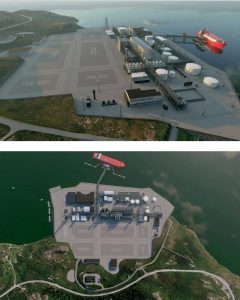
Horisont Energi has the aspiration to develop the most carbon and energy efficient blue ammonia plant in the world, an environmentally friendly plant with a focus on sustainable solutions. This article describes the main features of the Barents Blue Ammonia project, such as 99% carbon capture rate target, a high degree of modularisation, winterisation, infrastructure for ammonia and CO2 management and the provision for future expansion.
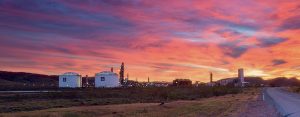
A new book by leading industry expert Kish Shah looks at all aspects of ammonium nitrate production.
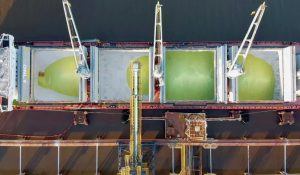
Sulphur dust is one of the greatest hazards when producing and handling solid sulphur, and methods for its suppression are vitally important to prevent fire and explosion.
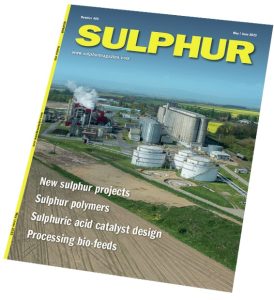
A reader wrote to me recently asking if I had considered the impact of general artificially intelligent systems like ChatGPT on the publishing industry. As a matter of fact I had, but only, somewhat narrowly and selfishly, on how it might impact my own job in the future. But the dramatic shift in AI capabilities that we have seen in the past couple of years is certainly food for thought, and I’ve seen no end of articles predicting the death of the creative industries.

CRU’s Nitrogen + Syngas conference convened at the Hyatt Regency Barcelona Tower in Barcelona, from March 5th-8th.
Storing urea under hot and humid ambient conditions can be a chall enge. Several quality parameters of the urea product itself like moisture, temperature and particle size distribution are critical. Fluctuations of these parameters over time are also important and can lead to caking issues and complaints by clients. Off-spec product means big losses in revenue and results in a troublesome stream that has to be handled separately. Learning from each other’s experiences is vital to minimise and avoid these problems. n

Mining major Anglo American is to invest up to $4 billion to complete its Wood-smith mine project in the UK.
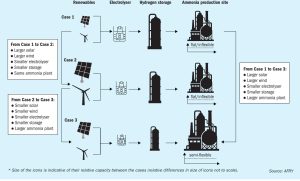
Due to the inherent nature of the renewable power, sizing eSyngas plants powered with renewable energy brings complexity normally not faced by natural gas-based facilities. In this article, Dr Raimon Marin and Dr Solomos Georgiou of AFRY discuss the application of AFRY’s state-of-the-art modelling tool to optimise the size and production of a green hydrogen system and a green ammonia plant based on given renewable power profiles and their associated variability (e.g., hourly, daily, seasonally, and annually).
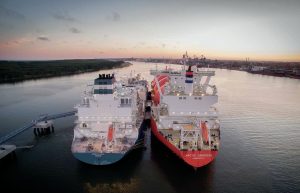
With Europe facing a long-term shortage of natural gas, and Russia looking east for new customers, how will changing global gas markets affect production of key syngas-based chemicals?