Market Outlook
• Global sulphur prices are expected to stay relatively stable as purchases in Asia slow down due to the closing of the purchasing window for the Chinese spring fertilizer application season.
CRU’s World Copper Conference was run at the start of April 2025 in Santiago, Chile, with the industry facing a crossroads. The Americas account for nearly half of the world’s mined copper, with South America producing 38% and North America contributing 10%. However, North American copper mines face cash costs 51% above the global average and 79% higher than those of their South American neighbours, positioning the region as one of the most expensive copper-producing areas globally. These high costs create a significant challenge, especially as securing a reliable copper supply has emerged as a geopolitical priority.
Due to an increasingly challenging market, Nyrstar will indefinitely lower production at its Hobart zinc smelter in Tasmania by around 25%. The plant’s zinc capacity is 280,000 t/a. “This decision follows a thorough and extensive review and is a direct response to deteriorating market conditions and financial losses being sustained by Nyrstar Australia,” the Trafiguraowned company said. “Nyrstar’s Australian assets continue to face significant financial challenges due to several external factors including worsening conditions in raw material markets, negative treatment charges and increased costs.”
Rheinhütte Pumpen has further developed its GVRN sulphuric acid pump so it can also be used in high-temperature applications such as in heat recovery systems.
The Self-Cleaning Liquid Sulphur Candle Filter (LSCF) is setting a new benchmark in liquid sulphur filtration. With its innovative candle arrangement and advanced back-flushing technology, it enhances filtration rates significantly and minimises downtime for cake discharge. Jan Hermans of Sulphurnet explores the LSCF design, process parameters, and operational advantages.
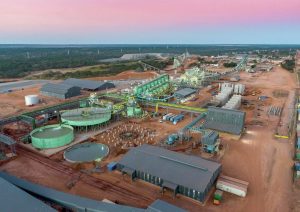
Indonesian nickel miner Merdeka Battery Materials (MBMA) and partners have signed definitive agreements to construct a high-pressure acid leach (HPAL) plant on the Morowali industrial park, Sulawesi. The unit will have a nameplate capacity of 90,000 t/a of contained nickel in mixed hydroxide precipitate (MHP). PT Sulawesi Nickel Cobalt (SLNC) will construct and operate the plant adjacent to the existing HPAL plant operated by PT Huayue Nickel Cobalt (HNC). SLNC will source and process laterite nickel ore through a 20 year commercial agreement with MBMA's SCM mine, starting from the commissioning date. An ore preparation plant will be built at the SCM mine to enable ore transportation via pipeline to the SLNC processing plant at IMIP. The total combined investment for constructing SLNC (including interest incurred during construction) is expected to be approximately $1.8 billion according to Merdeka. Construction of the project commenced in January 2025 and is expected to reach commissioning stage within 18 months.
Anglo American and Codelco have signed a memorandum of understanding (MoU) with the aim of jointly developing their neigh-bouring Los Bronces and Andina copper mines in central Chile.
• Sulphur prices have been revised higher in the latest forecast after supply from the Middle East was lower than expected in February, and buyers with uncovered demand were forced to chase prices upwards. UAE sulphur exports normally fall at the start of the year due to scheduled maintenance, but sales in February this year were 200,000 tonnes short of what is typical. Prices may climb more than expected as buyers scramble to cover their shorts. If supply is slower to return than currently anticipated, momentum may push prices even higher in the short term.
Jordan’s Prime Minister Jaafar Hassan laid the foundation stone for the second phase of Jordan Phosphate Mines (JPMC) new sulphuric and phosphoric acid plants at Al-Shidiya in a ceremony in mid-February. The Phase II expansion aims to increase the sulphuric acid plant's production capacity from 2,200 t/d to 4,450 t/d (1.5 million t/a). The phase will generate an additional 20 MW of energy per hour, with the potential to export 9 MW. The project will also boost the production capacity of the phosphoric acid plant from 900 t/d to 1,600 t/d (equivalent to 550,000 t/a P2 O5 ). Construction is expected to be completed, and operations begun by September of this year. With the expansion of the industrial complex in Aqaba and future projects involving potash and partnerships in the phosphoric acid industry, JPMC plans to increase its local consumption to 70%, while reducing external exports by 30%.
Sulphur’s key role as a plant nutrient means that its use as a fertilizer continues to be a major area of demand.