IFA open letter highlights global fertilizer supply risks from Middle East conflict
The current block to shipping through the Strait of Hormuz places global fertilizer supply chains at risk, warns the International Fertilizer Association (IFA).


The current block to shipping through the Strait of Hormuz places global fertilizer supply chains at risk, warns the International Fertilizer Association (IFA).

Grupa Azoty introduce DuoS®, a new nitrogen–sulphur fertilizer.

US-based phosphate producer Itafos reported higher production in 2025, as well as higher sales prices, in ...
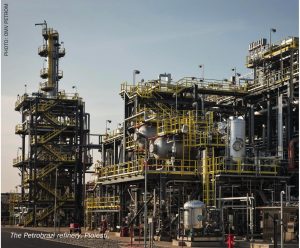
Romanian oil and gas group OMV Petrom has commissioned a new sulphur recovery unit at its Petrobrazi refinery, near the southern city of Ploiesti. Development work on the new SRU began in 2023, and represents the second at the site, treating acid gas produced during the refining process. The euro 45 million investment is part of euro 2 billion of improvements that have been made over the past 20 years as part of the company’s strategy to modernise its refining capabilities, aiming to reduce environmental impact. Last year, the company said it would invest around euro 750 million to build several sustainable fuel plants at the refinery, which are expected to become operational in 2028.

The Abu Dhabi National Oil Company (ADNOC), working in partnership with Italy’s Eni and Thailand’s PTT Exploration and Production, has completed a structured financing transaction of up to $11 billion for its huge Hail and Ghasha sour gas development. Dr. Sultan Ahmed Al Jaber, UAE’s Minister of Industry and Advanced Technology and ADNOC’s Managing Director and Group CEO, commented: “This landmark transaction builds on ADNOC’s successful track record of global energy partnerships and unlocks capital to drive progress at Hail and Ghasha, one of the world’s most ambitious offshore gas projects. The exceptional demand from over 20 leading global and regional financial institutions reinforces confidence in ADNOC’s value creation strategy, innovative approach to financing, and expertise in delivering mega projects. Hail and Ghasha is an important contributor to ADNOC’s gas strategy and is on track to generate significant value for ADNOC, our partners, and the UAE, while unlocking important new gas resources for our customers.”

CRU’s annual Sulphur+Sulphuric Acid Expoconference was held from November 3rd to 5th, at The Woodlands, Texas.

Viva Energy has commissioned a new ultra-low sulphur gasoline (ULSG) plant at its Geelong refinery to meet Australia’s updated fuel standards, which came into effect on December 15. Under the standards, all gasoline grades must contain a maximum of 10 parts per million (ppm) sulphur, a so-called Euro-V standard. The ULSG plant was officially opened by the Minister for Climate Change and Energy, Chris Bowen MP, alongside Viva Energy Chairman Robert Hill and CEO Scott Wyatt.
The deficit in the sulphur market has led to a new focus on melting down and selling stockpiles of sulphur around the world. From Kazakhstan to Canada, stocks of sulphur have been shrinking.
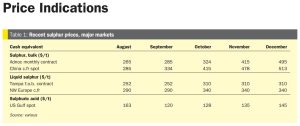
The global sulphur market’s bullish momentum from late 2025 has firmly carried over into the New Year, with prices pushing forward across most key regions despite a slow return to spot trading after the holiday break. With spot prices now past their 2022 highs and testing levels not seen since the 2008 peak, affordability has become the market’s central theme. The market remains divergent, with some buyers forced to accept the rally due to tight supply, while others, particularly in China, are showing clear signs of demand destruction.
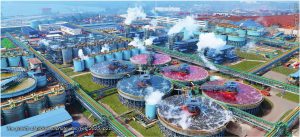
A complete listing of all articles and news items that appeared in Sulphur magazine during 2025.